
Along Tanzania’s coastline, the ocean is a source of food, income, culture and identity for communities whose livelihoods depend on fisheries, aquaculture, and other marine activities. But the conditions that have long shaped these livelihoods are changing. Across fishing communities in Tanga and Unguja, fishers describe stronger winds and waves, changing rainfall and seasonal patterns, declining fish availability, coastal erosion and changes in the marine ecosystems such as fisheries breeding zones. At the same time, these pressures are interacting with other challenges including destructive fishing practices, illegal, unreported and unregulated fishing (IUU), limited equipment, inadequate enforcement, and growing competition for marine resources.
These realities were at the center of a series of community engagements undertaken from 2–6 November 2026 by the African Group of Negotiators Experts Support (AGNES), in collaboration with the Ministry of Livestock and Fisheries (Mainland Tanzania) and the Ministry of Blue Economy and Fisheries (Zanzibar), with support from the Blue Convergence Fund (BCF). The engagements forms part of the project, “An Inclusive Multistakeholder Evidence-Based Approach Towards Climate-Resilient Fisheries Management in Small-Scale Fishing Communities Along the Coast of Tanzania.”
Listening to what fishing communities are experiencing
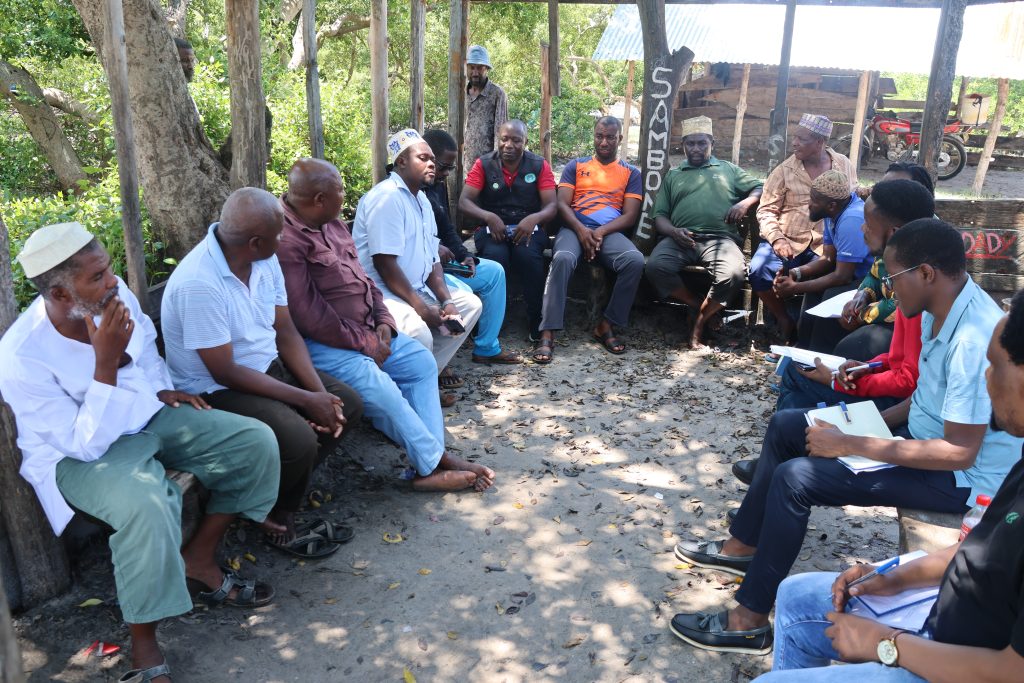
The process began where fisheries management ultimately matters most, engaging fishing communities themselves i.e, fisherfolks, BMU managers, seaweed farmers etc. In Tanga, engagements took place across Zingibari, Kasera and Kigobe fisheries landing sites, while in Unguja discussions were held at six fisheries landing sites: Mazizini, Malindi, Mtoni, Kama, Fungurefu and Mkokotoni. In total, 80 fishers were engaged, including Beach Management Unit representatives, fisheries actors, women working within fisheries value chains, seaweed farmers and other coastal resource users.
One concern surfaced repeatedly across each landing site i.e fishing is becoming more difficult and increasingly uncertain. Fishers spoke of reduced fish catches, longer fishing periods at sea and the need in some areas to sail farther offshore or into deeper waters to find fish. For small-scale fishers using small boats, these changes can mean higher fuel costs, greater safety at sea risks and fewer alternative livelihood options when conditions at sea become difficult.
Communities also pointed to the declining condition of marine and coastal ecosystems that sustain fisheries and mariculture. Coral bleaching, mangrove, and seagrass degradation were among the changes pointed out during the engagements. Importantly, these observations were not attributed to climate change alone. Fishers themselves highlighted overfishing, use of destructive fishing gear, marine pollution, IUU fishing and other human and environmental pressures as part of the wider challenge facing coastal fisheries.
Knowledge built from generations at sea
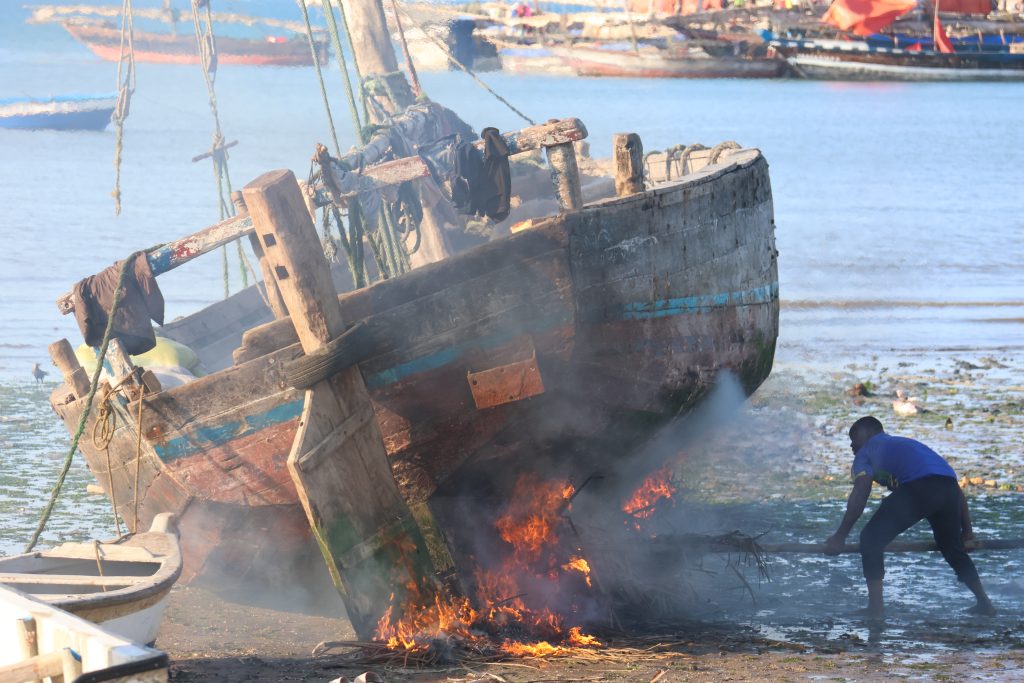
Alongside these challenges was another powerful story, the depth of knowledge that already exists within coastal communities. For generations, fishers have observed the sea, sky, and behaviour of marine organisms to understand changing ocean conditions. Across Tanga and Unguja, fisherfolk described using wind direction, waves, tides, currents, clouds, moon phases, stars, ocean sounds, birds and fish behaviour to guide decisions about when to fish, where to go and whether conditions are safe or not
This Indigenous and Traditional Knowledge is not static. It is built through observation, practical experience and learning from older fishers, then adapted as conditions change. Knowledge about seasons remains particularly important. Kaskazi and Kusi monsoon winds continue to influence fishing calendars and decisions in many communities. Yet fishers also noted that the same seasonal patterns are becoming less predictable, creating new uncertainty around knowledge that has traditionally guided fishing activities.
At the same time, modern sources of information and technology are increasingly part of daily fishing. GPS systems, mobile phones, weather forecasts, fish finders and motorised boats are being used alongside community knowledge. The opportunity, therefore, is to strengthen how science and indigenous knowledge complement one another.
Communities are already adapting
Fishing communities are not simply waiting for solutions. Across both locations, fishers described changes and practices they are already employing in response to shifting marine conditions. These include moving to alternative fishing grounds, changing fishing schedules and gear, using motorized boats and navigation technologies, adopting seasonal fishing closures, and participating in ecosystem conservation and restoration.
Livelihood diversification is also becoming increasingly important. Seaweed farming, crab farming, sea cucumber farming, agriculture, beekeeping and small businesses being among the activities identified as ways of reducing dependence on capture fisheries.
Marine conservation is a crucial part of the response. Communities described mangrove restoration, seagrass rehabilitation, coral conservation, seasonal closures and locally managed fishing areas as ecosystem-based approaches that can support ecosystem recovery and fisheries productivity.
Yet adaptation has limits. Modern boats and fishing equipment are expensive. Access to finance remains difficult. Community institutions often lack the resources required for patrols and enforcement. Alternative livelihoods require skills, markets, and investment before they can become viable sources of income. An ocean acidification affects the adaptive capacity for mangrove, seagrass and coral reefs.
From field experiences to shared solutions
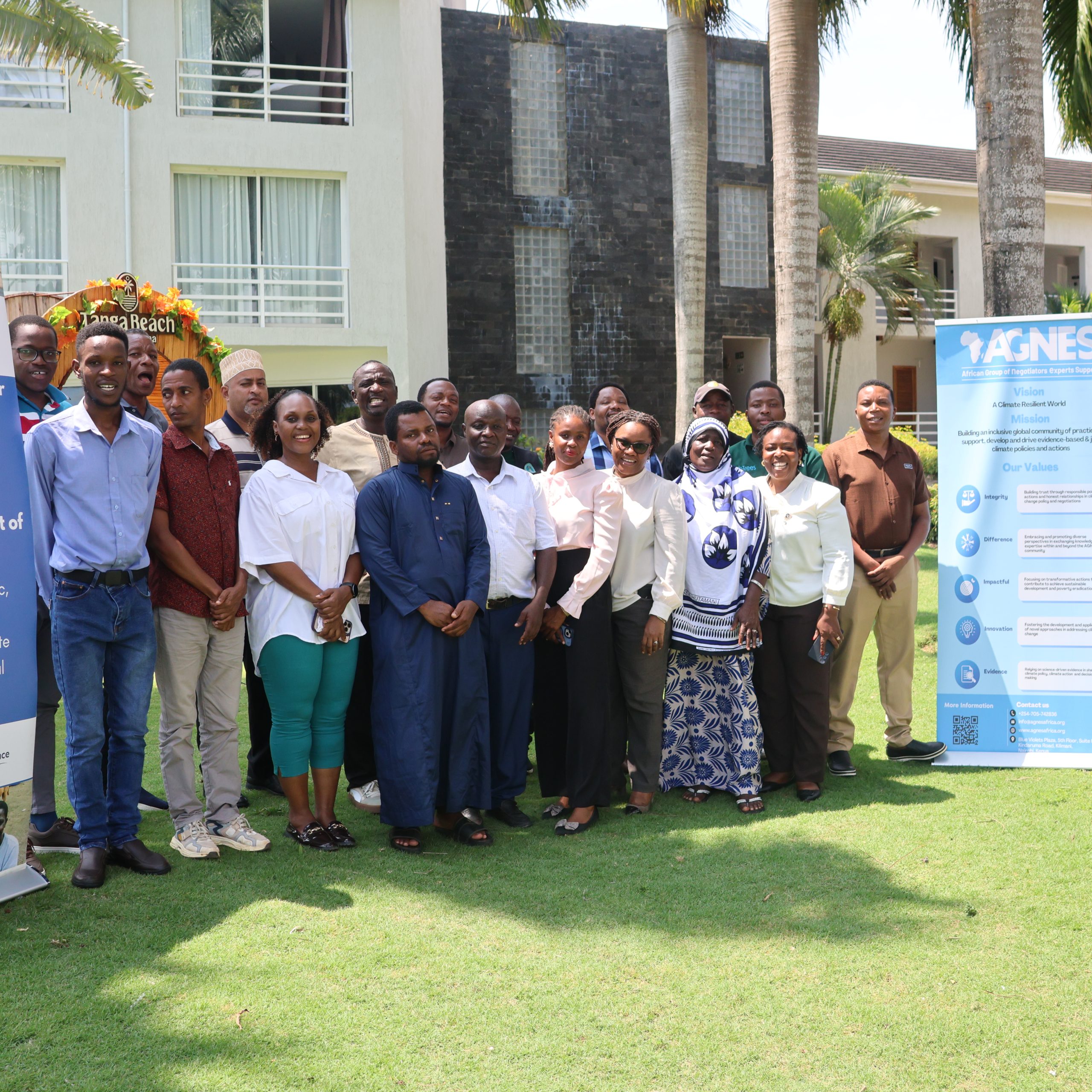
The fisherfolk engagements in both locations were followed by multistakeholder workshops in Tanga and Unguja. The workshops brought fisherfolk, local fisheries managers, government representatives, researchers, and other stakeholders for discussion, validation, and further interpretation.
Participants examined what communities had shared, explored the relationship between scientific evidence and Indigenous and Traditional Knowledge, and discussed practical pathways for strengthening climate-resilient fisheries management. Several priorities emerged across both locations: stronger fisheries policy and law implementation and enforcement, better access to climate and weather information, greater community participation in decision-making, improved fishing and safety equipment, ecosystem conservation and restoration, livelihood diversification and more effective institutional coordination.
A particularly important point of convergence was the recognition that scientific evidence and Indigenous and Traditional Knowledge can provide complementary insights. Fisherfolk highlighted the need to not only document community knowledge, but to meaningfully consider it in fisheries management and decision-making.
Building resilience from the knowledge already on the coast
The experiences from Tanga and Unguja show that climate-resilient fisheries management cannot be built around a single intervention. It requires healthy marine ecosystems, effective institutions, stronger enforcement, appropriate technologies, access to finance and climate information, and viable livelihood opportunities.
It also requires listening. Fishing communities are already observing change, responding to risks and carrying knowledge developed through decades of interaction with the ocean. Bringing that knowledge into conversation with scientific evidence can help ensure that fisheries management responds not only to changing climatic conditions, but also to the everyday realities facing the people whose livelihoods depend on the sea. For Tanzania’s small-scale coastal fisheries, resilience will depend as much on strengthening these connections as it will on introducing new solutions.