
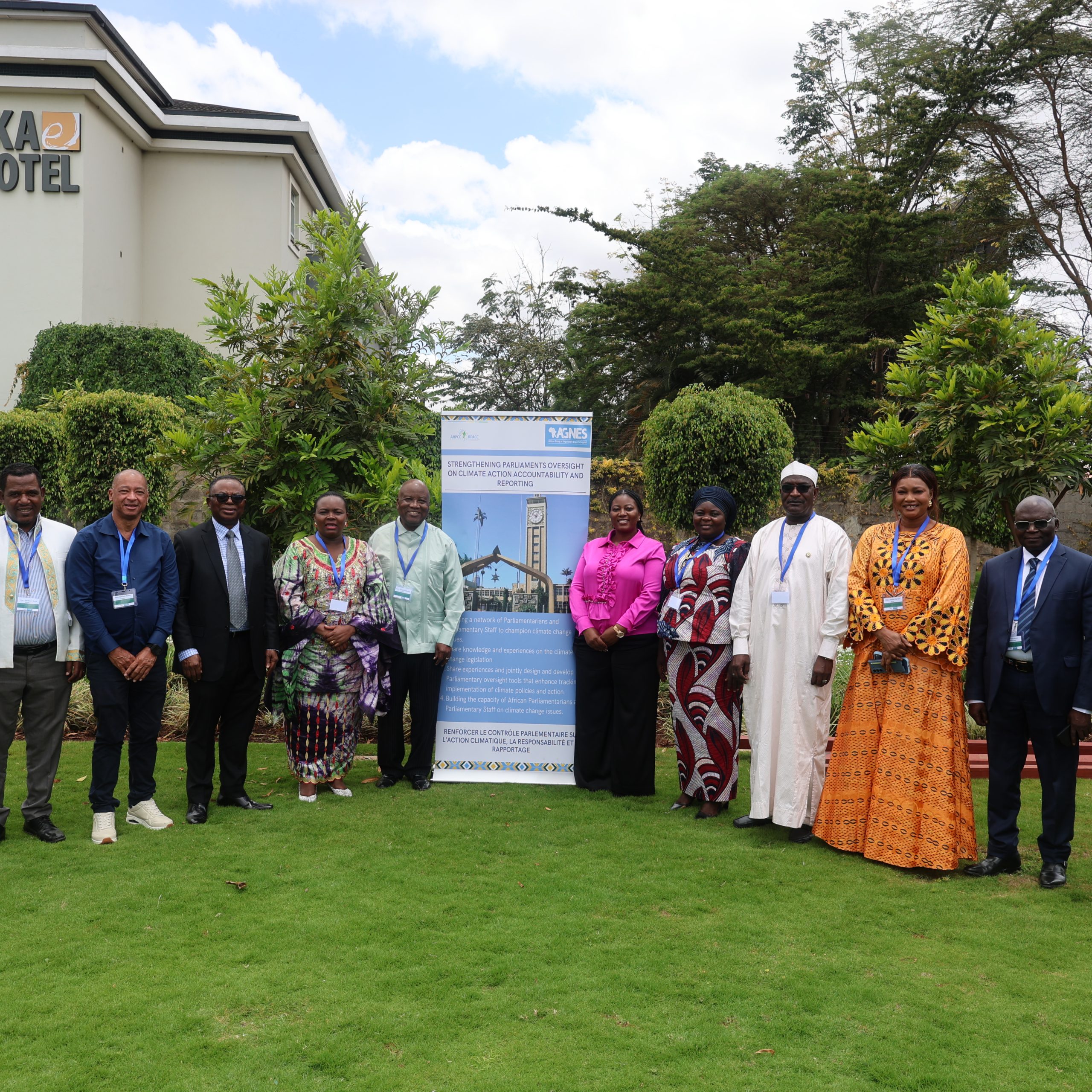
Africa’s climate response will depend not only on stronger policies and international commitments, but also on how effectively those commitments are translated into legislation, budgets, implementation and accountability. Parliaments sit at the centre of this process. Through their legislative, budgetary, oversight and representative functions, they can strengthen climate governance, scrutinise the use of climate finance and ensure that climate policies respond to the priorities of communities across the continent. This role was at the heart of the 2026 Executive Committee Meeting of the Africa Network of Parliamentarians on Climate Change (ANPCC), held in Nairobi, Kenya, from 8–9 October 2026.
Building a Stronger African Parliamentary Voice on Climate Change
Established in September 2024, ANPCC provides a continental platform for African parliamentarians working on environment, climate change, agriculture, natural resources and related issues to collaborate, exchange experiences and strengthen a common African parliamentary voice in climate processes. The Network has steadily expanded its engagement across national, regional and international climate spaces, creating an opportunity for African parliaments to play a more coordinated role in shaping and implementing climate action.
Since its establishment, ANPCC has advanced several initiatives aimed at strengthening parliamentary engagement in climate governance. These include the development and adoption of the Model Climate Change Law Framework for Africa, designed to provide African parliaments with guidance on good practices and key elements of climate legislation, and the Climate Monitoring and Accountability Tool (CMAT), developed to support parliamentary oversight of climate action. The Network has also participated in major continental and international climate processes, including COP29, the African Regional Forum on Sustainable Development, Inter-Parliamentary Union Meeting, the Africa Climate Summit and the African Ministerial Conference on the Environment.
From Climate Commitments to Implementation
One of the emerging priorities for African parliaments is the growing shift in international climate processes from negotiating commitments towards implementing them. As countries move forward with their climate commitments, parliamentarians have an increasingly important responsibility to examine how policies are financed, implemented and monitored at the national level. This is particularly important as Africa prepares for COP31 and COP32. Discussions in Nairobi considered Africa’s priorities within the evolving climate agenda, including access to predictable and affordable climate finance, stronger adaptation finance, implementation of the Global Goal on Adaptation, implementation of countries’ Nationally Determined Contributions and the future of international discussions on agriculture and food security.
The growing emphasis on implementation creates an important space for parliaments. International climate decisions ultimately need to connect with domestic legislation, national budgets, government programmes and accountability systems. Strengthening parliamentary capacity therefore helps bridge the gap between commitments made through international climate processes and tangible climate action within countries.
Strengthening Climate Accountability Through Better Information
Effective parliamentary oversight also depends on access to reliable and usable information. The meeting provided an opportunity to review progress on CMAT, which is being developed in Kenya, Nigeria, Zambia, Côte d’Ivoire and Ghana. The tool is designed as an AI-driven decision-support platform to strengthen the oversight role of African parliaments by improving access to information on climate action and progress. By strengthening access to climate information, tools such as CMAT can help parliamentarians ask more informed questions about implementation, public expenditure and progress against national climate commitments. This strengthens the connection between climate data and the constitutional oversight responsibilities of parliaments.
Setting Priorities for the Years Ahead
Looking ahead, ANPCC has identified five interconnected areas that will shape its strategic direction between 2026 and 2028. These include strengthening and consolidating the Network; building parliamentary leadership and capacity; keeping adaptation at the centre of parliamentary climate action; strengthening climate legislation and implementation of Nationally Determined Contributions and other climate commitments; and strengthening Africa’s parliamentary voice in multilateral, regional and national climate processes.
Adaptation remains particularly important. Africa continues to face significant exposure and vulnerability to climate impacts despite its relatively small contribution to historical global greenhouse gas emissions. Maintaining adaptation as a central parliamentary priority therefore provides an opportunity to connect national development concerns with climate legislation, financing and oversight.
Stronger Parliaments, Stronger Climate Action
The next phase of climate action in Africa will increasingly be defined by implementation. This makes the role of parliaments even more important. Climate commitments need corresponding legislation; climate priorities require budget allocations; implementation requires oversight; and communities need representation in decisions that affect their livelihoods and resilience.
Strengthening parliamentary leadership is therefore not separate from strengthening climate action—it is part of the institutional foundation required to deliver it. Through greater coordination, stronger capacity and improved access to climate information, ANPCC has an opportunity to strengthen the contribution of African parliaments to the formulation, financing, implementation and monitoring of climate policies across the continent.