
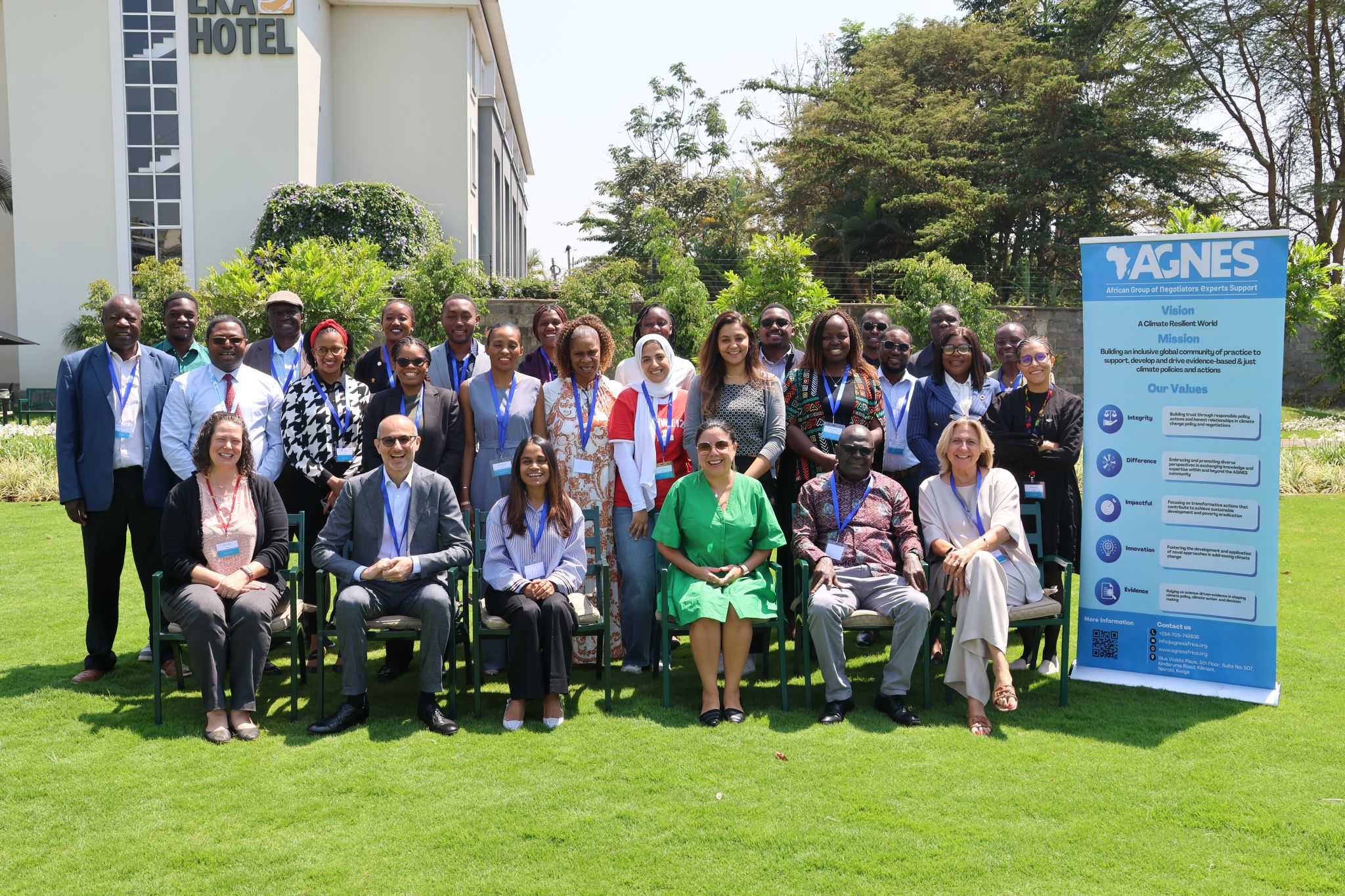
From 17–19 September 2025, Nairobi hosted a Pilot Training on Capacity Building for Negotiators, convened by the African Group of Negotiators Experts Support (AGNES) in partnership with United Nations Framework Convention on Climate Change Secretariat (UNFCCC) through its Regional Collaboration Centres, International Livestock Research Institute (ILRI) and Centre for Multilateral Negotiations (CEMUNE). The training responded to the pressing need to equip negotiators with the skills required to navigate the complex UNFCCC processes, particularly as countries shift from making commitments under the Paris Agreement to implementing concrete actions. Since COP7 in Marrakech, capacity building has been central to ensuring fairness and inclusivity in negotiations, and this pilot training continued that tradition with a new twist, a Training-of-Trainers approach that places interactive simulations at the heart of learning.
Why Negotiation Capacity Matters
Building strong negotiation capacity remains central to advancing Africa’s interests in global climate forums. Negotiations at these climate forums, i.e. COPs, SBs, are often technical, fast-paced and politically charged. Without adequate preparation, many delegates, particularly new and younger negotiators, struggle to influence the process. The outcomes of these negotiations have far-reaching consequences, shaping Africa’s development choices, access to climate finance and the resilience of its communities.
AGNES has long recognized this challenge. Through its Climate Governance, Diplomacy and Negotiations Leadership Program, more than 1800 African experts have already been trained in climate governance, diplomacy, and negotiations. This pilot builds on that legacy by embedding negotiation skills into a structured and replicable programme, one that not only equips individuals but also tests a model that can be scaled across the region.

AGNES Team Lead
Learning by doing
The TOT pilot training was not designed as a typical workshop. From the opening, it combined substance with interaction, bringing together seasoned negotiators such as Dr. George Wamukoya OGW, Cecilia Njenga, Gianluca Crispi, Christa Castro, and Laurence Pollier, alongside new voices in a setting that encouraged both learning and testing.
Over the three days, participants focused on key areas that are central to effective engagement in the UNFCCC process, including:
- Climate science and the use of IPCC evidence in negotiations.
- Legal and procedural rules that guide the UNFCCC process.
- Managing the negotiation process before, during and after conferences.
- The role and responsibilities of co-facilitators.
- Fundamentals of climate negotiation and communication.
- Emerging issues such as the use of artificial intelligence in negotiations.
- Substantive priorities and mandates expected at COP 30.
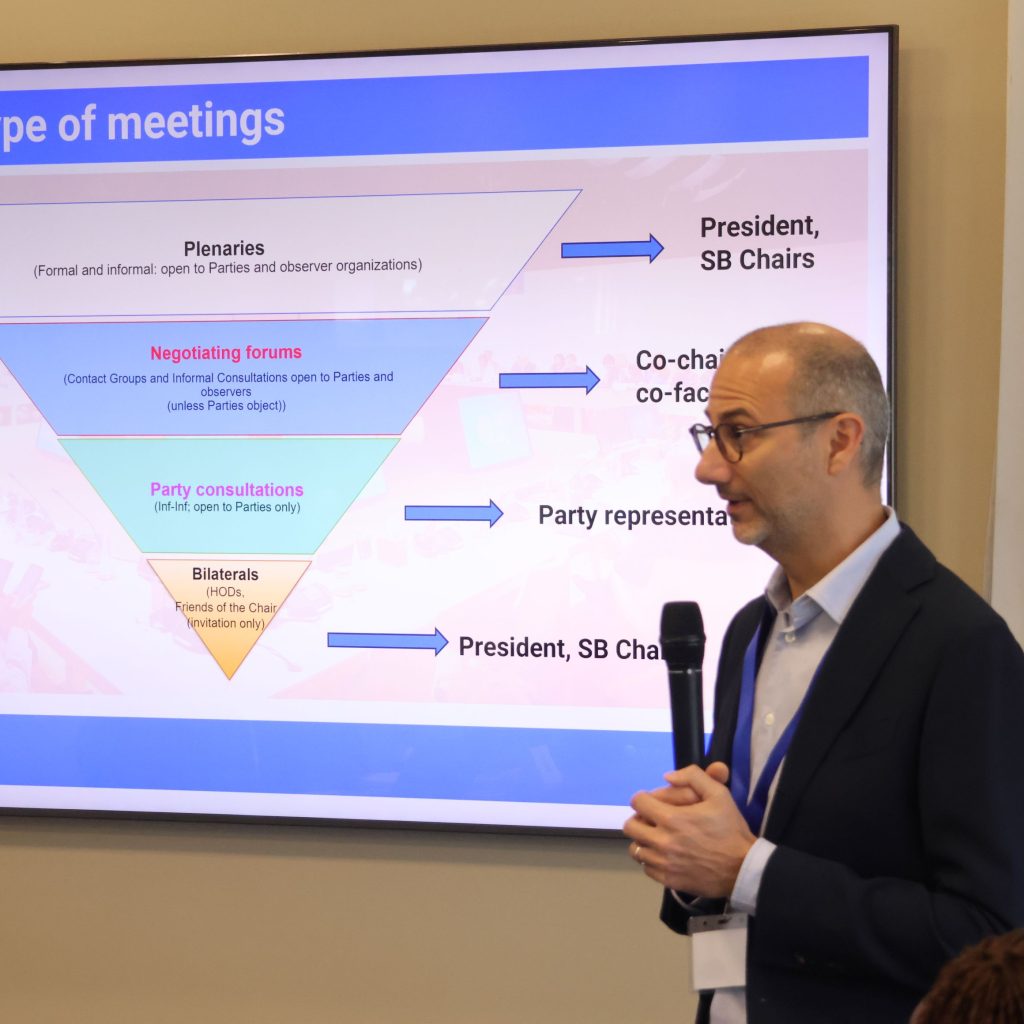
Participants first anchored themselves in the essentials. Heather Maseko guided a session on climate science, showing how evidence frames negotiations. Legal and procedural issues were unpacked by Gianluca Crispi, while Laurence Pollier explored how the management of the negotiation process plays out before, during and after conferences. These discussions were not presented as abstract concepts but as lived experience, how documents are drafted, how coordination happens under pressure, and how co-facilitators steer difficult rooms. With AGNES facilitating reflection after each module, these sessions gave clarity to processes that often feel opaque to new delegates

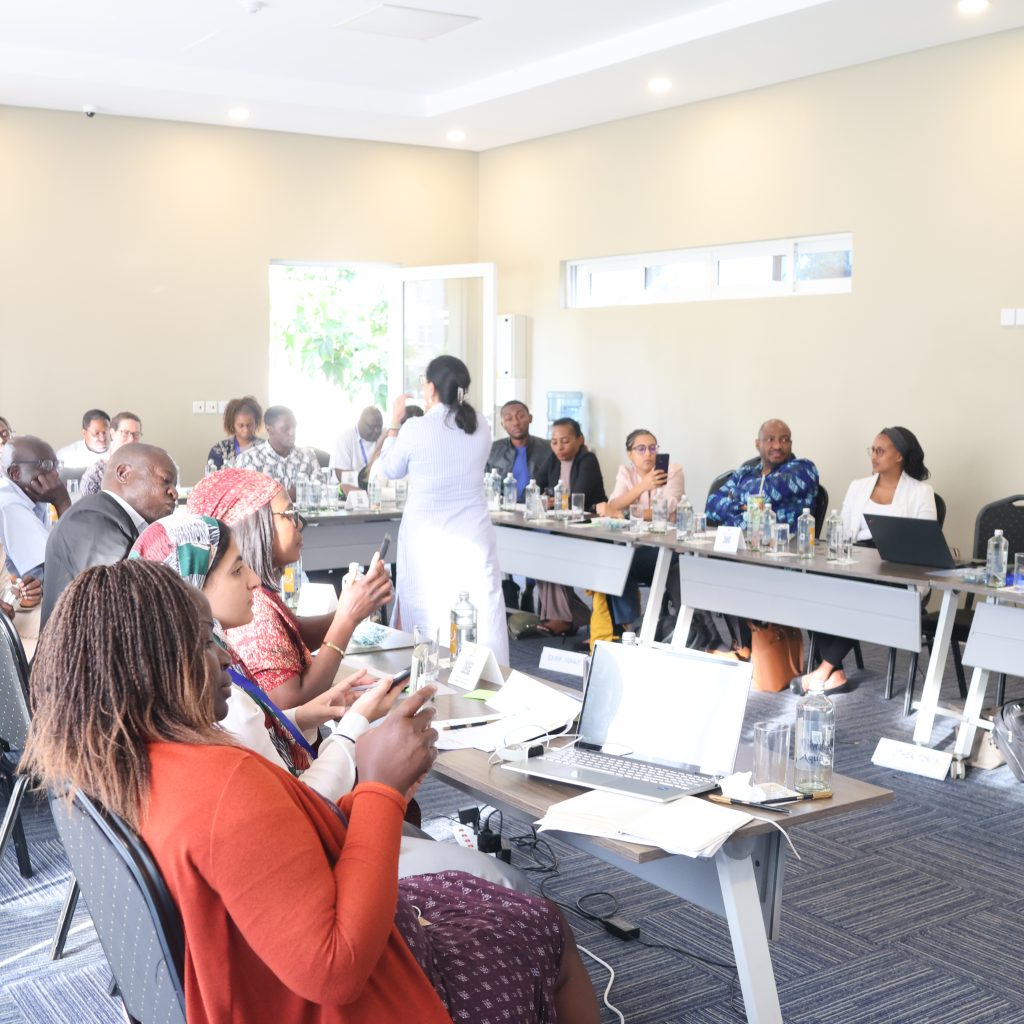
With this grounding, the training moved to its heart: the simulations. In teams, participants took on negotiation roles, drafted text, and debated positions. The energy in the room was unmistakable, voices rose, compromises were tested, and strategies were challenged. What might have seemed abstract in earlier sessions suddenly came alive. The debriefs that followed were just as valuable, allowing participants to reflect on what worked, where they stumbled, and how real negotiations could be approached differently.
Co-creating a scalable model
The pilot was designed not only to strengthen individual skills but also to test a cascade approach where trained participants can go on to train others. This model ensures that negotiation knowledge and skills are multiplied, reaching national and regional levels rather than remaining with a small group. Feedback gathered during the pilot is now helping refine the modules and methodologies into a structured package, supported by online resources, that can be adapted and applied across Africa.
Looking Ahead
The Nairobi pilot demonstrated the value of interactive and experiential learning in preparing African negotiators for the complex realities of international climate negotiations. The lessons and feedback captured over these three days will inform a full-scale programme that combines in-person training, simulations, and online resources.