
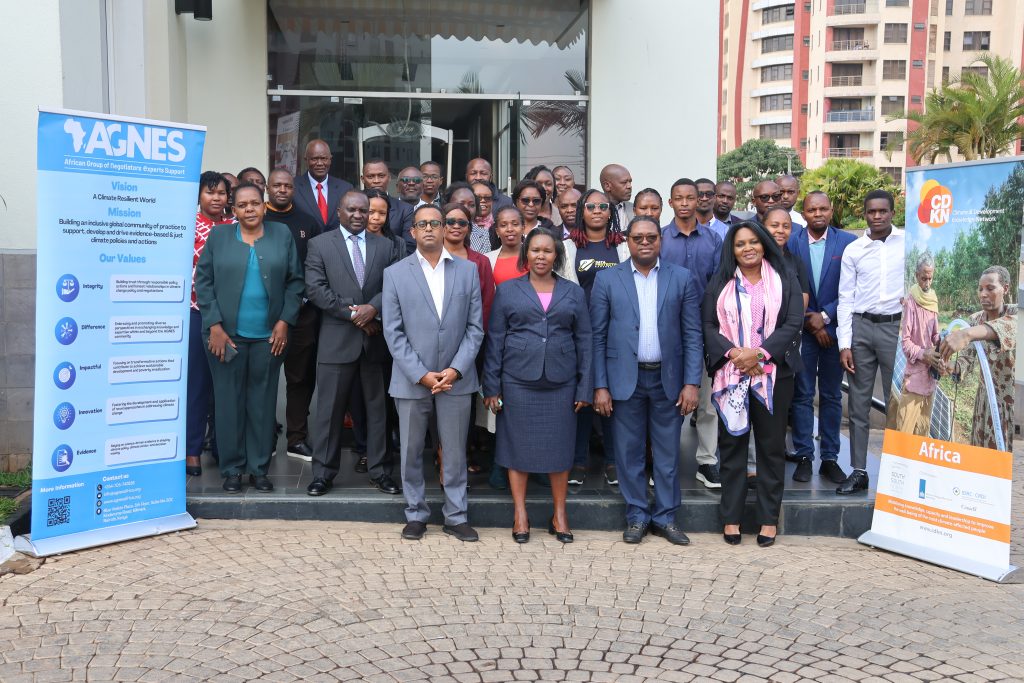
The Ministry of Environment, Climate Change, and Forestry, in collaboration with AGNES and South South North (SSN) under the CDKN program, hosted a National Stakeholder’s Inception Meeting on Climate Action Impacts Tracking and Reporting. This workshop marks a collaborative step in the development of a Monitoring, Evaluation, Reporting and Learning (MERL) tool which aims to digitize the tracking of Kenya’s climate actions and investments.
Setting the Stage
The meeting, officially opened by the PS State Department of Environment and Climate Change, Dr. Eng. Festus Ngeno, brought together stakeholders from Makueni and Vihiga County Governments, the State Department of Forestry, and institutions such as World Resources Institute (WRI) and Africa Research and Impact Network (ARIN). The primary objective was to review Kenya’s existing M&E practices to understand their current state, identify gaps and assess the challenges and opportunities in tracking climate actions and measuring the impacts of climate interventions. While the tool is still in development, the workshop’s outcome signals the beginning of a collaborative process to shape the tool.
The Vision Behind the MERL Tool
The inception meeting focused on the MERL tool’s potential to strengthen the country’s monitoring and evaluation efforts especially assessing the effectiveness of climate project investments. The meeting focused on understanding the conceptual framework of the tool to enable monitoring and evaluation of climate action investments, ensuring timely and standardised data collection and reporting. This set the stage for more in-depth discussions on its functionalities, potential benefits and implementation.
Collaborative development of MERL tool
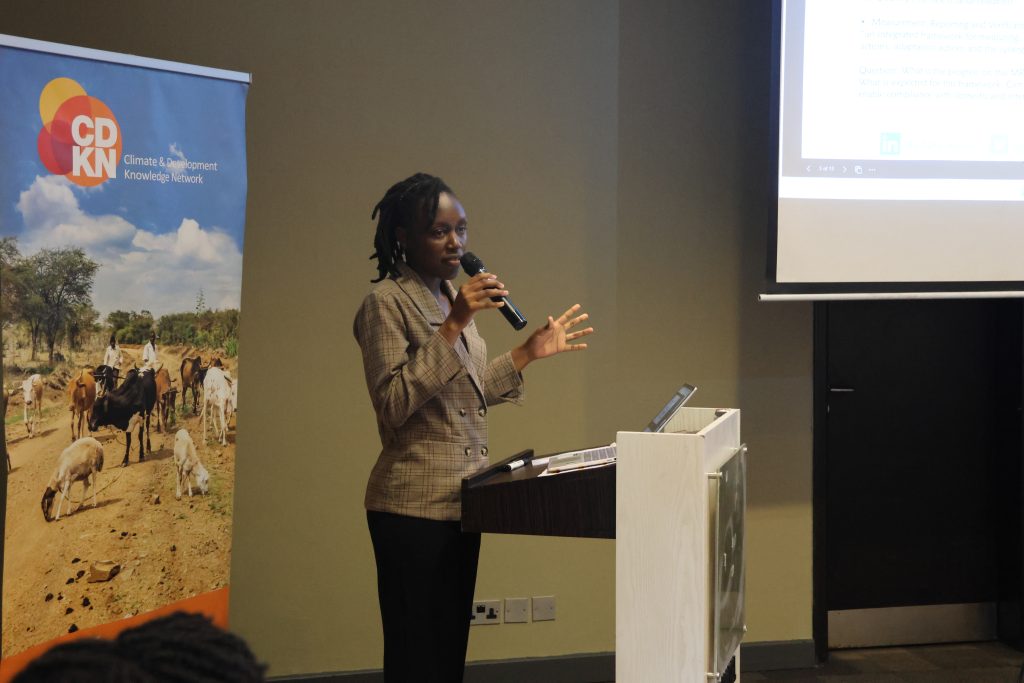
Petronila Adhiambo from the AGNES provided valuable insights into Kenya’s current MERL structure, highlighting the its strengths and limitations. She emphasized how the MERL tool could contribute in bridging these gaps which is to ensure data flow from the local level to the national level to strengthen coordination across the two level of government. Additionally the reporting will highlight the story on the progress of adaptation interventions by highlighting the impacts and outcomes of projects (this will be possible by integrating outcome and impact level indicators on the tool).
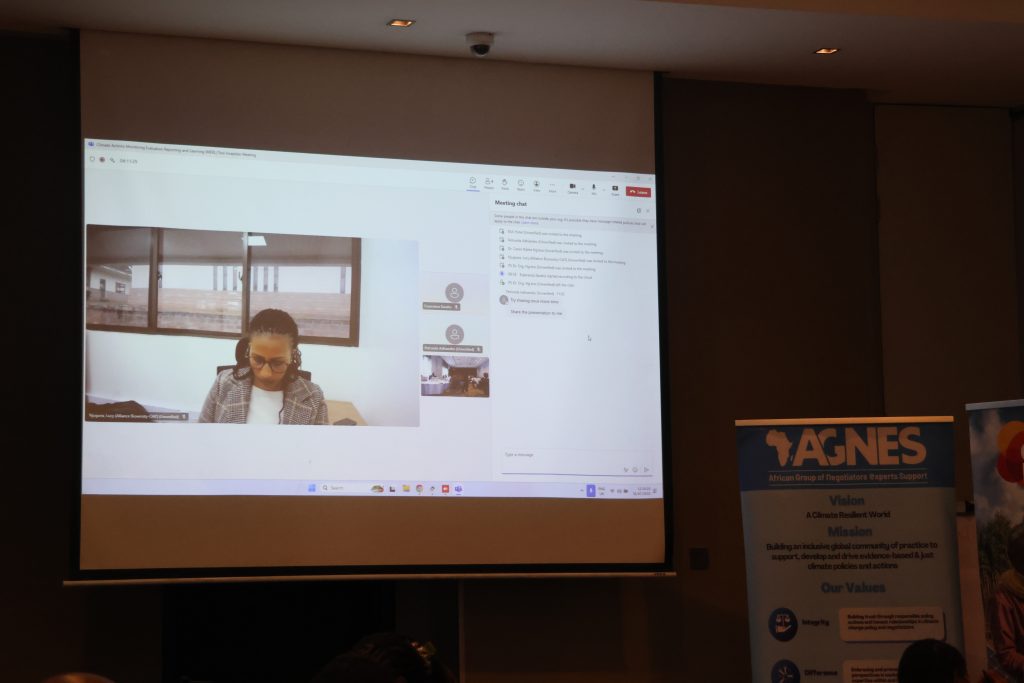
Dr. Lucy Njuguna’s presentation on the Global Goal on Adaptation (GGA) further reinforced the tool’s relevance, connecting local climate action with international reporting. Through interactive breakout sessions, stakeholders discussed practical ways to deploy the MERL tool including aspects on hosting rights, design and how it could be integrated to existing MEL systems. The workshop concluded with a commitment to work with a select team that form part of the technical working group to strategise on development of the tool.
Conclusion
The journey of developing the MERL tool has only just begun, but the workshop provided a clear path forward. As the MERL tool evolves, it will undoubtedly play a critical role in shaping the future of climate action investments in Kenya, as it provides evidence on effectiveness of climate project and ensuring that the country remains on track to meet its climate commitments.