
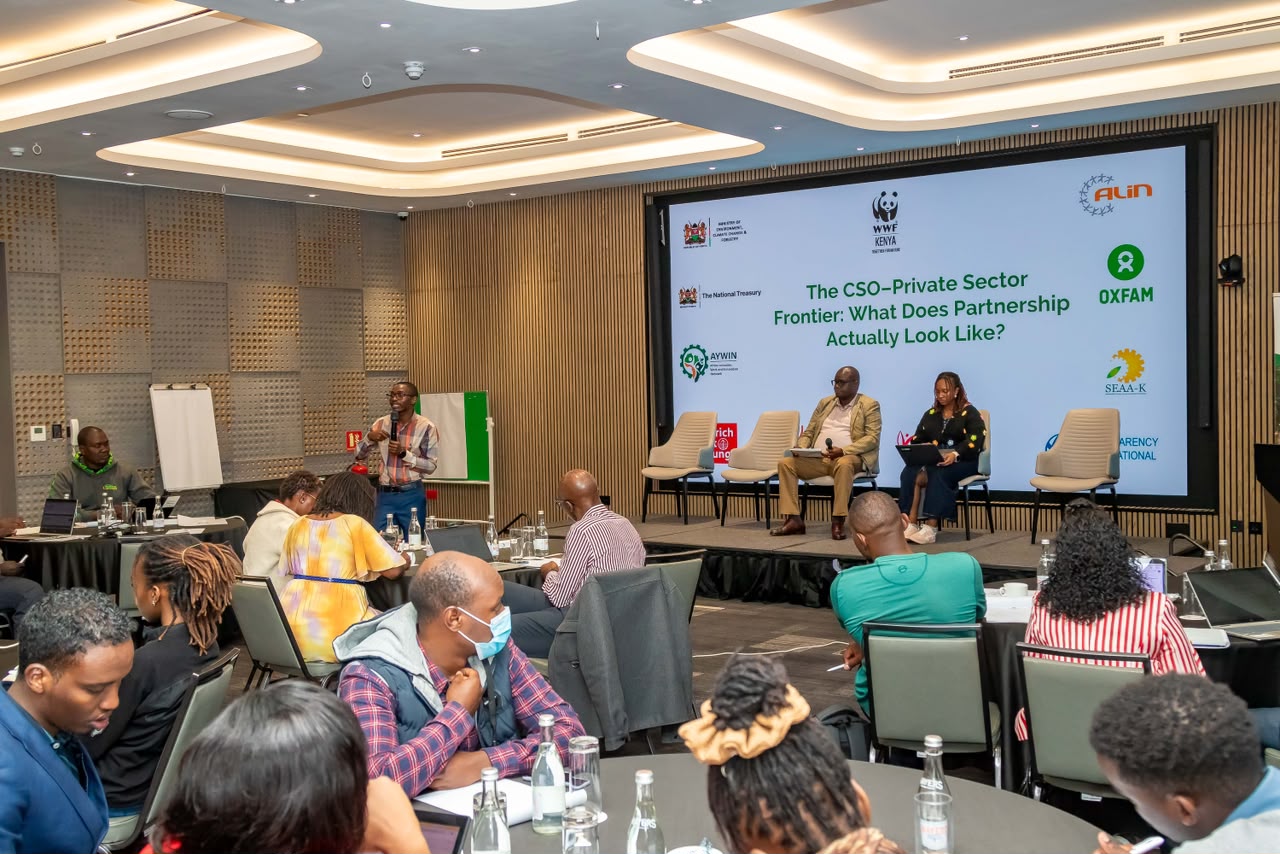
The AGNES participated in the Second Multi-Stakeholder Dialogue on Community-Centered Investment for Resilience, under the theme ‘Rethinking Climate Finance’.
The three-day dialogue was convened by the Africa Inclusion, Work and Innovation Network (AYWIN), WWF-Kenya, Arid Lands Information Network (ALIN), Friedrich-Ebert-Stiftung (FES), Mercy Corps and the Africa Youth Climate Fund (AYCF), in collaboration with the National Treasury and the Ministry of Environment, Climate Change and Forestry. It brought together national and county government officials, financial institutions, private-sector actors, development partners, civil society organizations, academia and community representatives.
A changing climate finance landscape
As Africa witnesses a quiet but significant shift in its development financing landscape, innovative approaches to climate finance have become important!
The timing of this dialogue was significant, as traditional donor funding is becoming increasingly constrained, while the scale and frequency of climate-related impacts continue to grow. This changing landscape requires governments, communities, civil society organisations and the private sector to explore more diverse and sustainable financing models.
Moving beyond traditional donor funding
Discussions highlighted the importance of moving beyond traditional donor funding by strengthening partnerships, co-designing solutions with the private sector, strengthening institutional capacity to develop innovative business cases and positioning community initiatives as investment-ready opportunities.
A range of financing approaches were discussed, including development finance, blended finance, carbon markets, private-sector investment models and the emerging nature and loss and damage financing mechanisms.
Discussions acknowledged that the private sector can play a significant role in climate action. However, meaningful engagement requires civil society organisations, communities and public institutions to better understand how private investment decisions are made.
Communities as partners, not beneficiaries
Community-centred investment goes beyond directing finance towards local projects. It means involving communities in identifying priorities, designing interventions, allocating resources, monitoring implementation and evaluating results.
The participation of Ward Climate Change Planning Committee members and community representatives helped ground the dialogue in the realities faced at the local level. These actors understand the climate risks affecting their livelihoods, water resources, food systems and ecosystems. Their knowledge is therefore essential in determining which investments are appropriate, sustainable and responsive to local needs.
Kenya’s decentralized climate finance experience – the Financing Locally Led Climate Action programme, provided an important reference point. Kenya’s experience demonstrated the potential of decentralised financing and the impact to communities.
From dialogue to practical action:
For AGNES, the dialogue reinforced the importance of strengthening African institutions and local actors to develop credible investment proposals, engage financing institutions and demonstrate the economic, environmental and social value of community-led climate action.