
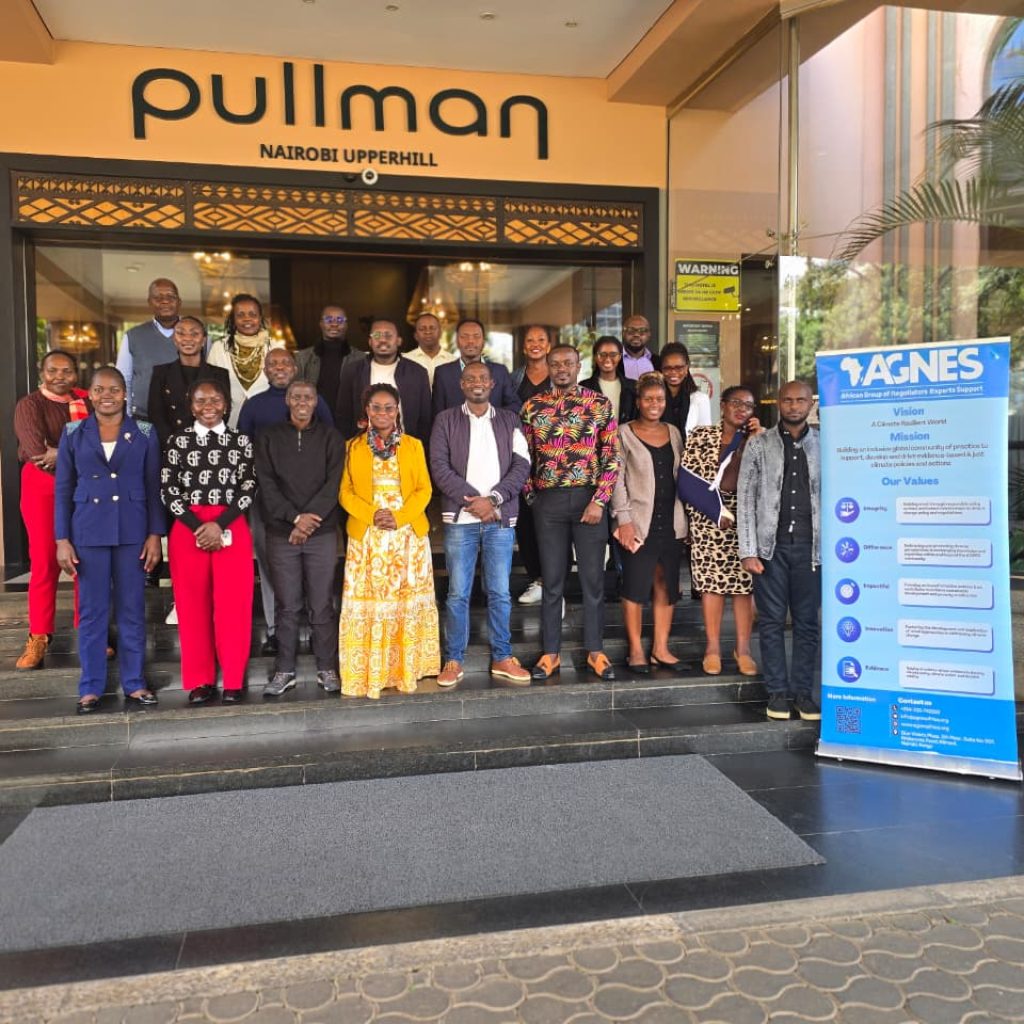
From 30th June to 2nd July, Kenyan experts and practitioners from different disciplines convened in Nairobi for the Government Review Workshop on the Second Order Draft of the IPCC Special Report on Climate Change and Cities. With support from the African Group of Negotiators Experts Support (AGNES Africa), the Kenya Meteorological Services Authority (KMSA) convened a workshop comprised of expert reviewers drawn from academia, research institutions, and relevant government sectors to review, refine and consolidate a common position of Kenya’s comments in the Second Order Draft (SOD) of the IPCC Special Report on Climate Change and Cities (SRCITIES).
Reflecting Kenya’s urban climate realities
Cities and urban areas are increasingly exposed to climate risks, including flooding, heat stress, pressure on infrastructure, water stress, public health concerns, and impacts on livelihoods. For African cities, these challenges are closely linked to rapid urban growth, development priorities, inequality and infrastructure needs.
The workshop provided an important opportunity to ensure that Kenya’s perspectives and evidence contribute to a global assessment that reflects the realities of cities, particularly in Africa. By engaging experts across disciplines, the review process helped strengthen Kenya’s contribution to the IPCC Special Report and support a more inclusive and evidence-informed global climate science process.
A coordinated national review process
In his remarks, the Principal Secretary, Dr. Eng. Festus Ng’eno, emphasized the importance of Kenya’s active participation in the IPCC process and the need to ensure that the country’s urban climate realities, development priorities and evidence are reflected in global climate science. The opening session set the tone for a technical and collaborative review process, recognizing that climate change and cities are increasingly central to national development, resilience planning, and global climate action.
Strengthening the quality of Kenya’s technical inputs
The first day focused on building a shared understanding of the IPCC review process, timelines, and expectations. Experts were taken through an overview of the Special Report on Climate Change and Cities, as well as review protocols and effective IPCC commenting for respective chapters. These sessions helped participants frame clear, constructive, and evidence-based comments, while maintaining the standards required for the IPCC review process. Following the plenary sessions, participants broke into five chapter-based groups to begin the detailed review of the report.
Technical working sessions and peer review
Day two focused on continued technical work through chapter-based breakout sessions. Experts reconvened in their respective groups to refine comments and deepen the review of the draft report. Later, they reconvened in a plenary session, where each chapter group presented its comments for quality assurance, suggestion of additional sources of evidence/references, and to ensure that the framing is up to the IPCC review standards. This peer review process allowed participants to strengthen the comments across chapters, improve consistency, and identify areas requiring further refinement.
Finalization and next steps
The workshop concluded with the final review and validation of chapter comments, consolidation of inputs, and agreement on arrangements for uploading the final comments to the IPCC. Through this process, Kenya has taken an important step in supporting the development of the IPCC Special Report on Climate Change and Cities and ensuring it is robust and reflects Kenya’s and Africa’s realities The workshop also demonstrated the value of coordinated national engagement in global scientific assessments, particularly on issues that are central to climate resilience, sustainable urban development, and evidence-based policymaking.